Table of Contents
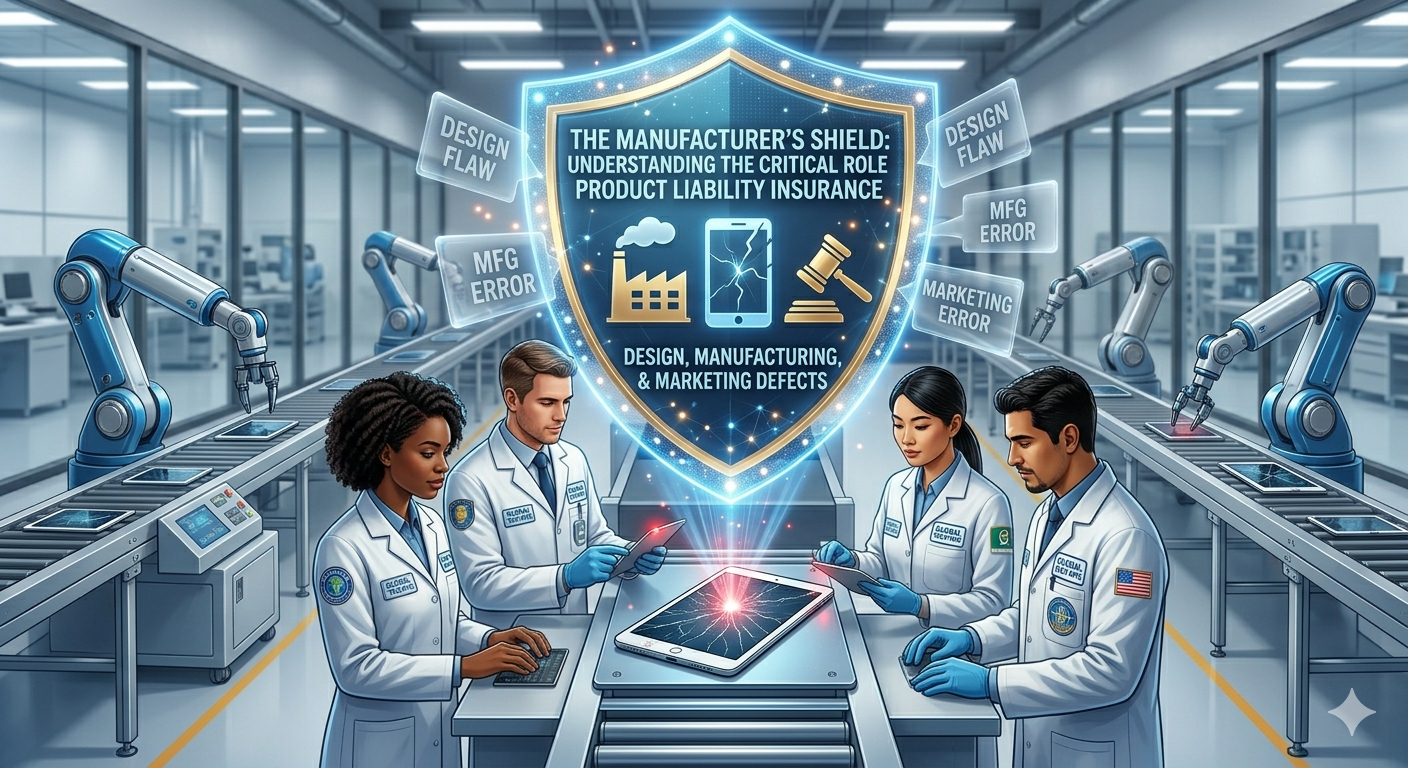
In a world of global supply chains and “strict liability” laws, a single defective component can trigger a financial catastrophe. Whether you are a manufacturer, a distributor, or an e-commerce seller, Product Liability Insurance is the only thing standing between your business and a ruinous lawsuit.
The Concept of Strict Liability
Unlike many other legal areas, product liability often operates under “strict liability.” This means a claimant doesn’t necessarily have to prove you were negligent; they only need to prove that the product was defective and that the defect caused their injury.
The Three Pillars of Product Claims
Most lawsuits fall into one of three categories:
-
Design Defects: The product was inherently dangerous from the start, even if manufactured perfectly (e.g., a car model prone to flipping).
-
Manufacturing Defects: A mistake occurred during production that made a specific batch dangerous (e.g., contamination in a food processing plant).
-
Marketing Defects (Failure to Warn): The product lacked proper instructions or failed to warn users about non-obvious risks.
Why E-commerce Sellers Aren’t Safe
Many small businesses selling on platforms like Amazon or Shopify believe the “platform” or the “original manufacturer” carries the risk. However, in many jurisdictions, anyone in the chain of distribution can be held liable. If the original manufacturer is overseas and unreachable, the legal focus shifts entirely to the seller.
The High Cost of Recalls
Beyond legal settlements, a product defect often necessitates a Product Recall. The logistics of retrieving thousands of items, notifying the public, and disposing of hazardous goods can easily cost ten times more than the actual lawsuit. A robust policy often includes “Recall Expense” coverage to manage these logistical nightmares.