Table of Contents
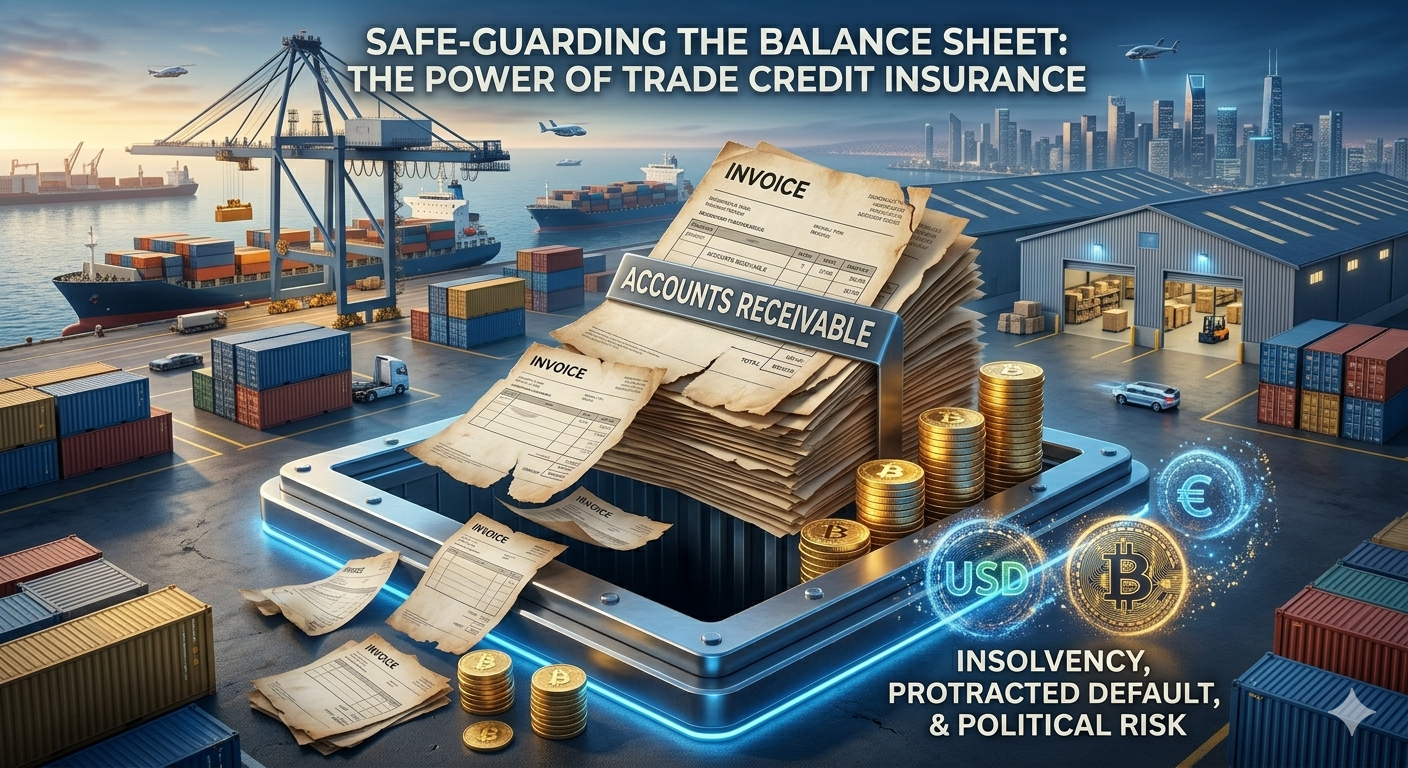
For B2B companies, the “Accounts Receivable” (AR) line on the balance sheet is often the largest asset—and the most vulnerable. If a major client goes bankrupt or refuses to pay, it can create a “domino effect” that topples your own business. Trade Credit Insurance (TCI) turns your risky invoices into guaranteed cash.
What Does It Cover?
Trade Credit Insurance protects your business from non-payment by your B2B customers. It typically covers:
-
Insolvency/Bankruptcy: When your buyer officially runs out of money.
-
Protracted Default: When a buyer simply refuses to pay after an extended period.
-
Political Risk: For exporters, this covers non-payment due to government upheaval, currency shortages, or war in the buyer’s country.
Turning Risk into Growth
TCI isn’t just a defensive play; it’s a growth strategy. With your receivables insured, you can:
-
Offer Better Terms: You can confidently offer “Net-60” or “Net-90” terms to new clients, giving you a competitive advantage.
-
Expand Globally: You can sell into emerging markets where you wouldn’t otherwise risk the credit exposure.
-
Access More Capital: Banks are much more likely to lend against accounts receivable if they know those invoices are backed by a major insurance provider.
The Data Advantage
When you take out a TCI policy, the insurer provides a “credit limit” for each of your customers. Because insurers have massive databases of payment history, they act as an early warning system. If your insurer suddenly lowers the limit for a specific client, it’s a signal that their financial health is failing—allowing you to stop shipping goods before the client goes under.