Table of Contents
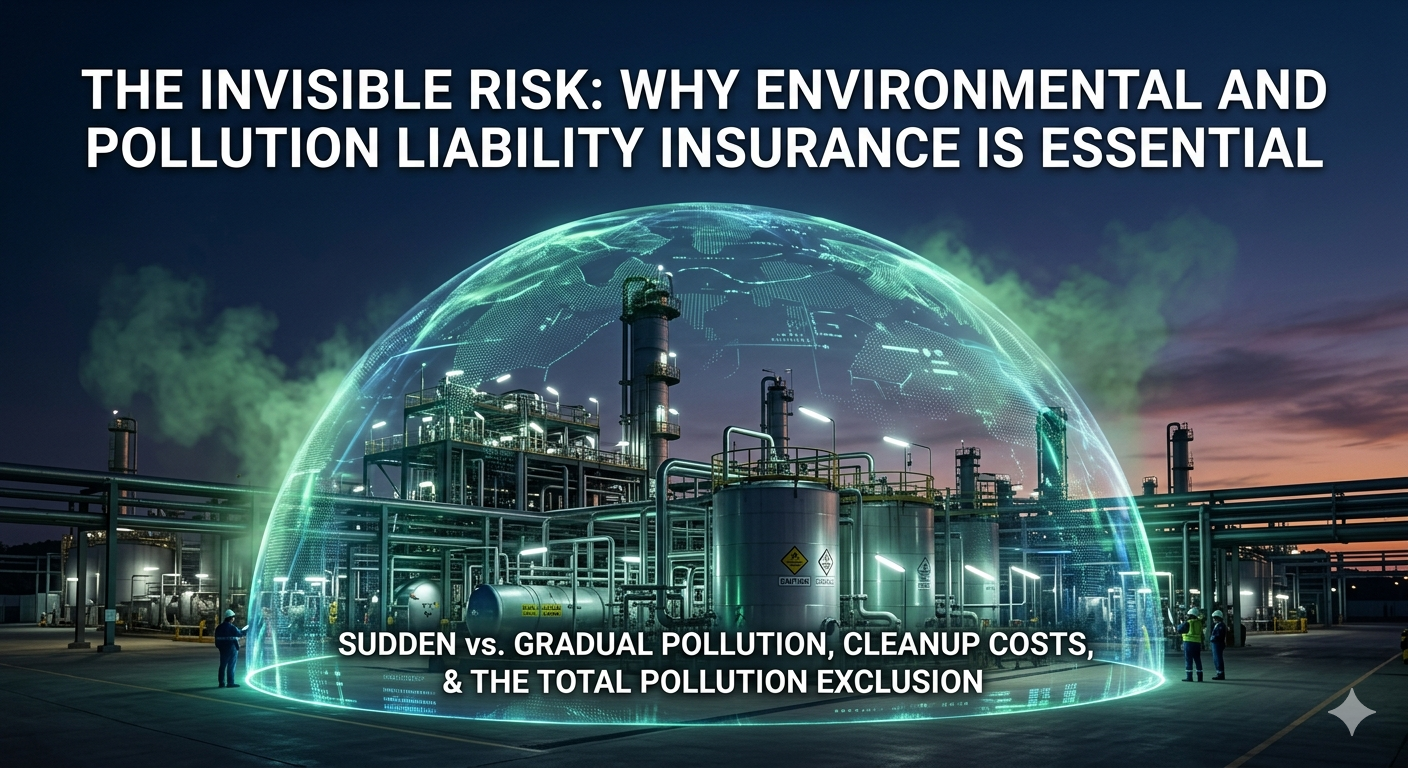
Many business owners assume their General Liability (GL) policy covers “accidents.” However, since the 1980s, almost all standard GL policies have included a Total Pollution Exclusion. If a chemical leak, mold outbreak, or fuel spill occurs on your property, you are likely standing alone—unless you have Environmental Liability Insurance.
Sudden vs. Gradual Pollution
Pollution events aren’t always dramatic explosions. They often fall into two categories:
-
Sudden and Accidental: A pipe bursts, spilling 500 gallons of chemicals into a nearby stream.
-
Gradual Pollution: A slow underground tank leak that persists for five years before being discovered. Most specialized environmental policies cover both, whereas older or limited “riders” might only cover sudden events.
Who Needs This Coverage?
It’s not just for oil refineries. High-risk industries include:
-
Construction: Accidentally hitting a utility line or disturbing asbestos.
-
Healthcare: Improper disposal of biohazardous waste.
-
Real Estate: Mold, legionella, or lead paint issues in managed buildings.
-
Manufacturing: Chemical runoff or emissions violations.
The Cost of Remediation
The EPA (Environmental Protection Agency) can hold a business owner liable for cleanup costs regardless of who was at fault. Remediation can cost millions, involving soil removal, groundwater filtering, and massive legal fines. Environmental insurance provides the funds for these “cleanups” and, more importantly, the specialized legal counsel needed to navigate environmental law.