Table of Contents
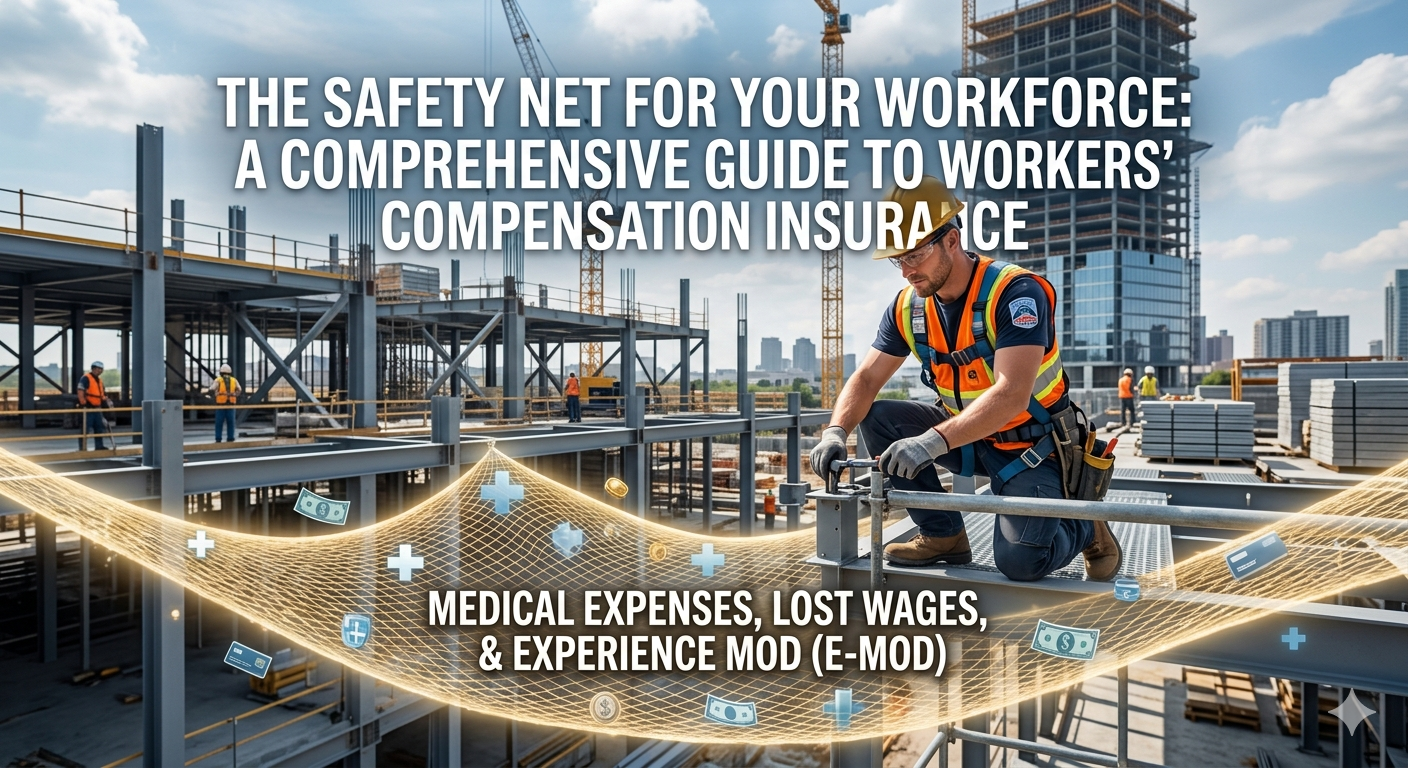
In most jurisdictions, Workers’ Compensation Insurance isn’t just a recommendation—it’s a legal mandate. For business owners, it represents one of the largest insurance line items, but it also provides a critical “exclusive remedy” that prevents employees from suing their employers for workplace injuries.
What Does Workers’ Comp Actually Cover?
Workers’ compensation is a “no-fault” system. This means an employee doesn’t have to prove the employer was negligent to receive benefits. The policy typically covers:
-
Medical Expenses: From ER visits to long-term physical therapy.
-
Lost Wages: Partial replacement of income while the employee is unable to work.
-
Rehabilitation: Costs for retraining if the employee cannot return to their previous role.
-
Death Benefits: Financial support for the families of workers killed on the job.
Understanding the “Experience Mod” (E-Mod)
The cost of your premium is heavily influenced by your Experience Modification Rate. This is a numerical representation of your company’s claims history compared to others in your industry.
-
A rate of 1.0 is average.
-
A rate below 1.0 means you have a good safety record and receive a discount.
-
A rate above 1.0 means you’ve had more claims than average, resulting in a “debit” or higher premium.
The “Employer’s Liability” Gap (Part B)
Standard Workers’ Comp has two parts. While Part A covers the statutory benefits, Part B (Employer’s Liability) protects the business if a third party sues you as a result of the employee’s injury (for example, a spouse suing for loss of consortium). Ensuring your Part B limits are high enough is a crucial step in modern risk management.